
Commercial Roofing for Mounds View Properties Along the Highway 10 Corridor
Flat Roof Replacement for Mounds View Commercial Building Stock
Commercial properties along Mounds View's Highway 10 corridor represent a building inventory assembled across several development generations — retail centers, professional office buildings, light commercial structures, and service-sector facilities built in waves as the corridor filled out over decades of Ramsey County suburban development. Many of these properties carry flat-roofed structures with membrane systems installed well before current Minnesota Energy Code requirements and maintained with varying levels of consistency since original installation. The Highway 10 corridor's commercial buildings face exposure conditions that concentrate roofing stress in specific ways. Properties on or near the primary commercial strip experience the traffic and activity load of a high-use commercial corridor while managing roofing systems that, in many cases, were not designed for the occupancy intensification that has occurred over time. HVAC equipment additions, exhaust system modifications, and utility penetrations added after original construction have created membrane penetration points not accounted for in the original drainage and flashing designs. Each additional penetration represents a location where seam and flashing integrity needs to be maintained through freeze-thaw cycling — a maintenance load that accumulates as buildings age and tenant improvements are made over successive occupancy cycles. Commercial property owners along Highway 10 who are acquiring or refinancing existing buildings increasingly need documented roof condition reports that speak to remaining membrane life and current code compliance status, not just a verbal assessment of whether the roof appears serviceable.
EPDM and TPO Membrane Systems for Mounds View Properties
The ownership profile of commercial real estate along Mounds View's Highway 10 corridor includes a significant proportion of individually-owned properties — smaller strip centers, freestanding retail, and professional office buildings held by local owners rather than institutional property management companies. These owners often manage their buildings with less dedicated facilities staff than larger corporate properties, which means roofing decisions get made reactively — after a leak appears — rather than through systematic condition monitoring. Deferred maintenance on flat-roofed commercial buildings in this context follows a predictable pattern: visible leak points trigger spot repairs, while the broader membrane deterioration developing around those same structures continues unaddressed. By the time multiple leak points appear across the building, the repair cost that would have been manageable earlier has often grown to the point where replacement is the only economically defensible choice. Understanding this ownership reality is why written condition reports and maintenance documentation matter specifically for Mounds View commercial property owners — they provide the information needed to make proactive decisions before deferred maintenance forces a more expensive outcome. Commercial properties in Mounds View face freeze-thaw cycling consistent across Ramsey County — membrane seams expand and contract through Minnesota winters in ways that accelerate failure at existing vulnerability points. Properties that have not had a formal inspection within the past two to three years carry unknown membrane condition risk into each winter season, with no documented baseline to support a repair-versus-replacement decision when a problem surfaces.
Membrane System Selection for Mounds View Commercial Properties
Commercial flat roof replacement in Mounds View requires a realistic assessment of the building stock conditions common along Highway 10 and the surrounding commercial corridors. Strip retail centers and freestanding commercial buildings in this market often carry modified bitumen or single-ply systems installed in the 1980s and 1990s that have received multiple patch repair cycles without systematic evaluation of the underlying deck and insulation conditions. When a replacement is finally scoped on a Mounds View commercial property that has been through several patch cycles, the tear-off phase regularly reveals deck moisture that has been present for years — absorbed through seam failures that were individually patched but never evaluated as part of a broader membrane condition analysis. Deck moisture present for extended periods affects insulation performance, creates substrate degradation, and can compromise structural members below in severe cases. Identifying and documenting the extent of deck damage before new membrane materials are ordered determines whether the project scope needs to include deck repair or section replacement — and protects the property owner from discovering after installation that the new system has warranty exposure because of undisclosed substrate conditions. Minnesota Energy Code compliance for replacement projects in Mounds View also requires careful review of insulation R-value documentation, particularly on older buildings where the original insulation assembly does not meet current Chapter 1323 requirements and triggers an upgrade obligation when a permitted replacement project is submitted to Ramsey County building officials for review and approval.
Biannual Maintenance Programs for Mounds View Flat Roofs
Commercial storm damage across Mounds View's Highway 10 business corridor typically follows regional hail events that affect Ramsey County broadly, but the pattern of damage on any individual property depends on the age and condition of the membrane system in place. Older modified bitumen and early single-ply membranes with surface granule erosion or existing seam stress are more susceptible to hail impact penetration than newer systems, meaning two buildings affected by the same storm can have dramatically different damage profiles and different claim outcomes depending on their pre-storm membrane condition. This is precisely why pre-storm documentation — baseline condition reports that establish the state of the membrane before any weather event — is valuable for commercial property owners in Mounds View. Carriers that question whether impact damage existed before the storm have a much more difficult argument when the property owner can produce an inspection report from six months prior showing no pre-existing damage in the affected areas. For properties without pre-storm documentation, the claim process relies entirely on impact pattern evidence gathered after the event — which requires experienced commercial roofing assessment rather than a general contractor walkover that does not distinguish between hail impact marks and wear-related surface degradation. Documentation built for Ramsey County carrier submission needs to address these distinctions directly, because commercial adjusters in this market are familiar with the difference between credible impact evidence and general deterioration claims that carriers routinely dispute during the review and settlement process.
Storm Documentation and Insurance Support for Mounds View Properties
Maintenance programs for Mounds View commercial flat roofs deliver their most consistent value on properties that have previously cycled through reactive repair approaches — building owners who have experienced the cost of emergency call-outs, interior damage from undetected membrane failures, and tenant disruption from active leaks understand the economics of preventive maintenance after the fact. For properties on Highway 10 where tenant relationships and commercial continuity are primary concerns, a structured maintenance program is the mechanism that prevents operational disruptions that unplanned leak events create. Biannual inspection schedules for Mounds View commercial properties are calibrated around Minnesota's seasonal demands — pre-winter visits address drain clearing, seam vulnerability assessment, and penetration flashing sealant condition before freeze-thaw cycling begins; spring visits document whatever damage the previous winter produced and prioritize remediation before summer heat cycling stresses any developing seam failures further. Strip retail centers along Highway 10 present specific maintenance considerations that differ from single-tenant commercial buildings. Multiple tenant spaces under a single roof mean that a drain failure or membrane seam deterioration in one section can produce interior water intrusion affecting a tenant's space while the building owner is unaware of any problem on the roof above. Pre-winter maintenance that specifically addresses drainage performance across all zones of a retail center roof reduces the probability of localized failures that create disproportionate tenant impact. Written condition reports after each maintenance visit provide Mounds View property owners with the documentation needed for capital planning, insurance submissions, and informed ownership decisions.
Comprehensive Commercial Roofing Services in Blaine
Tailored to Your Needs
Blaine's commercial properties — from the industrial corridors along Highway 65 to the institutional structures near the National Sports Center campus — require roofing systems engineered for Minnesota's freeze-thaw cycles, hail seasons, and snow load demands. We offer the full range of commercial flat roofing services for Anoka County property owners and facility managers.
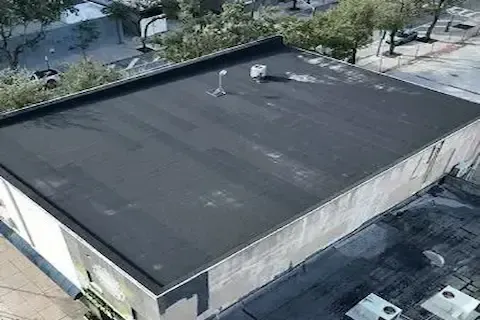
Full commercial flat roof replacement in Blaine including deck inspection, tapered insulation, and warranted TPO or EPDM membrane installation for Anoka County properties.

Commercial TPO roofing systems installed to manufacturer specification with heat-welded seams and full warranty coverage for Blaine MN and Anoka County commercial properties.

EPDM commercial roofing installation for Blaine MN properties — fully adhered, mechanically fastened, or ballasted configurations built to perform through Minnesota's freeze-thaw cycles.

Commercial roof repair for Blaine MN and Anoka County flat roofs — seam failures, penetration flashings, storm damage patches, and membrane repairs with documented scope before any work begins.

Commercial storm damage roofing restoration in Blaine MN — emergency response, insurance documentation, temporary protection, and full membrane replacement for Anoka County properties.

Structured commercial roof maintenance programs for Blaine MN property managers — biannual inspections, pre-winter drain clearing, proactive sealant work, and written condition reports.

Modified bitumen roofing installation and reroof for Blaine MN commercial buildings — torch-applied multi-layer systems that deliver redundant waterproofing for Minnesota climates.

Commercial roof inspection services for Blaine MN and Anoka County — written condition reports with section-by-section ratings and documented photographs for capital planning and insurance.

Commercial roof coating services for Blaine MN flat roofs — silicone and acrylic applications that extend membrane life and qualify for Xcel Energy cool roof rebates in Minnesota.

New construction commercial roofing for Blaine MN building projects — full membrane specification, Anoka County permit management, and Minnesota Energy Code compliance from pre-bid through final inspection.
Frequently Asked Questions
Commercial Roofing can be complex, and we’re here to provide answers to common questions. Here are some frequently asked questions from our clients.
Frequently Asked Questions about Commercial Roofing Blaine MN
How long does a commercial flat roof last in Minnesota?
Most commercial flat roofs in Minnesota last 15 to 25 years depending on membrane type, installation quality, and how consistently the roof is inspected through freeze-thaw cycles and heavy snowfall seasons.
What is the best flat roof membrane for Blaine MN commercial buildings?
TPO is generally the top choice for new commercial flat roofs in Blaine and Anoka County. Its heat-welded seams, UV reflectivity, and performance through Minnesota freeze-thaw cycles make it the most reliable option for most commercial applications.
How often should a commercial roof be inspected in Minnesota?
Minnesota commercial property owners should schedule professional roof inspections twice a year — once before winter to identify vulnerabilities before ice loading, and once in spring to document any damage caused by ice damming or freeze-thaw membrane stress.
Do commercial roofing projects in Anoka County require a building permit?
Anoka County commercial roofing projects typically require a building permit issued through the city or county permitting office. Full replacements almost always require permits. We handle the permitting process on all qualifying projects as part of our service scope.
How do I document commercial storm damage for an insurance claim in MN?
Commercial hail damage claims in Minnesota must be documented thoroughly before an adjuster arrives. This means photos of impact marks on membrane, metal edging, and HVAC equipment. We provide professional storm damage assessments that meet Anoka County carrier documentation requirements.
Can a commercial roof coating extend the life of a flat roof in Blaine?
A commercial roof coating can extend flat roof life by 10 or more years at a fraction of replacement cost. Silicone and acrylic coatings qualify for Xcel Energy cool roof rebates in Minnesota, making them a highly cost-effective option for qualifying commercial properties in Blaine.
Need Commercial Roofing?
What Our Satisfied Clients Have to Say About Blaine Commercial Roofing
We pride ourselves on delivering great results and experiences for each client. Hear directly from home and business owners who’ve trusted us with their Commercial Roofing needs.

We manage three office buildings in Blaine and have worked with a lot of roofing contractors over the years. The difference here is they actually understand commercial flat roofs — TPO specifications, drainage slope requirements, Anoka County permitting. They replaced the membrane on our largest building and handled the whole permit process. No surprises, clean work.
Marcus T
After last spring's hail storm we had significant damage to our warehouse roof on the Highway 65 corridor. They came out within 24 hours, documented everything the insurance adjuster needed, and had a full TPO replacement scope ready before any other contractor even returned our call. The claim was approved and the job was done inside three weeks.
Sandra K
We had been getting quotes for replacing a modified bitumen roof on our Blaine commercial property that were all over the map. These guys inspected it, showed us exactly what sections needed replacement versus what could be maintained, and gave us a phased plan that fit our capital budget. That kind of honest assessment is rare in this industry.
Greg Halverson
The Trusted Commercial Roofing Expert Near You
Ready to hear more about expert services at Blaine Commercial Roofing?
Contact us today to receive a detailed, no-obligation quote.

Blaine & the Twin Cities metro
Monday-Friday: 9am-5pm, Saturday: 11am-3pm
