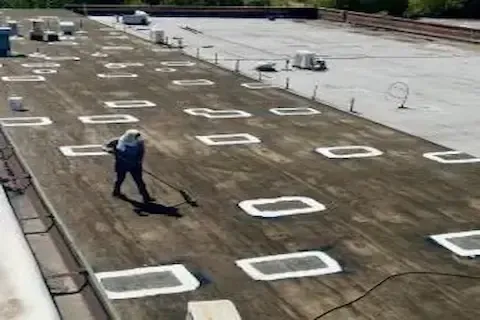
Flat Commercial Roof Repair for Blaine MN Buildings
Flat commercial roofing systems dominate the Blaine, Minnesota commercial landscape, from the retail strips along Highway 65 to the industrial complexes near the Anoka County Airport. These membrane-based systems require specialized repair approaches that differ significantly from sloped residential roofing, particularly when addressing the ponding water issues common in Minnesota's freeze-thaw climate.
Understanding the repair process becomes critical when your building faces membrane deterioration, seam failures, or penetration leaks that threaten inventory, equipment, and operations.
Flat Roof System Components and Common Failure Points
Commercial flat roofs in Blaine typically feature either EPDM rubber, TPO thermoplastic, modified bitumen, or built-up roofing systems. Each system presents distinct repair challenges based on material properties and installation methods.
EPDM systems commonly fail at seams where adhesive degrades over time, particularly along parapet walls and around rooftop equipment. The rubber membrane itself may develop punctures from foot traffic, fallen branches, or hail damage during Minnesota's severe weather seasons.
TPO roofing shows vulnerability at welded seams when thermal cycling causes expansion and contraction. Heat-welded joints can separate, creating entry points for water infiltration. Additionally, TPO membranes may crack in extreme cold conditions, especially on buildings with inadequate insulation causing thermal bridging.
Modified bitumen systems experience granule loss on high-traffic areas, base sheet separation during wind uplift events, and torch-down seam failures where overlapping sections weren't properly bonded during installation.
Built-up roofing develops alligatoring patterns as asphalt ages, gravel displacement that exposes underlying felts, and blister formation when moisture penetrates between layers. These systems require careful evaluation to determine whether spot repairs suffice or complete section replacement becomes necessary. The four failure modes above account for most service calls here; our breakdown of the most common commercial roof leak causes in Anoka County goes through where each one typically starts.
Leak Detection and Assessment Procedures
Effective flat roof repair begins with precise leak location identification, often complicated by water's tendency to travel horizontally before penetrating interior spaces. Professional assessment involves multiple detection methods beyond visual inspection.
Electronic leak detection uses low-voltage electrical current to identify membrane breaches through conductivity changes. This method proves particularly effective on EPDM and TPO systems where pinhole leaks may not be visible during dry conditions.
Infrared thermography reveals temperature differences indicating moisture presence within roofing assemblies. Wet insulation retains heat differently than dry materials, creating thermal signatures visible through specialized cameras. This technique works best during temperature differential periods, typically early morning or late evening hours.
Flood testing remains the definitive method for seam and penetration evaluation. Controlled water application over suspected areas, combined with interior monitoring, confirms leak sources and determines repair scope. However, flood testing requires favorable weather conditions and may not be suitable during Minnesota's winter months.
Core sampling provides subsurface analysis when extensive moisture damage is suspected. Removing small sections reveals insulation condition, deck integrity, and membrane attachment quality. This destructive testing method helps determine whether repairs can address surface issues or if deeper assembly problems require comprehensive replacement.
Repair Methods and Material Selection
Flat commercial roof repairs range from simple patches to complete section reconstruction, depending on damage extent and surrounding material condition. Repair method selection directly impacts longevity and warranty coverage.
Patch repairs address isolated punctures, tears, or small seam separations using compatible membrane materials and appropriate adhesives or welding techniques. EPDM patches require primer application and pressure-sensitive adhesives, while TPO repairs use heat welding or tape systems depending on field conditions and patch size.
Commercial Roof Repair professionals often recommend seam reinforcement when initial repairs reveal widespread adhesive failure. This process involves cleaning existing seams, applying new bonding agents, and installing reinforcement strips to prevent future separation.
Section replacement becomes necessary when membrane damage exceeds economical patch repair limits or when underlying insulation requires replacement due to moisture saturation. New sections must integrate seamlessly with existing materials while maintaining proper drainage patterns and thermal performance.
Penetration repairs demand particular attention since roof-mounted equipment, vents, and drains create natural weak points. Proper flashing installation, sealant selection, and membrane integration prevent future failures around these critical areas. Boot systems, pipe flashings, and equipment curbs require periodic maintenance regardless of overall roof condition.
Emergency temporary repairs using roofing cement, fabric reinforcement, or tarp systems provide immediate protection while permanent solutions are planned and executed. These measures prevent further interior damage during material procurement and favorable weather windows.
Cost Factors and Pricing Considerations
Commercial flat roof repair costs in Blaine vary significantly based on accessibility, material requirements, labor intensity, and project timing. Understanding these variables helps property managers budget appropriately and evaluate contractor proposals.
Material costs fluctuate with petroleum pricing for rubber and bituminous products, while supply chain disruptions can affect availability and lead times. EPDM membrane typically costs less per square foot than TPO, but installation complexity and longevity expectations influence total project economics.
Labor factors include crane or lift requirements for high buildings, safety equipment needs, and specialized technician availability. Repairs on occupied buildings may require after-hours work or phased completion to minimize business disruption, affecting labor costs accordingly.
Access challenges significantly impact pricing when buildings lack adequate roof access, require special equipment positioning, or present safety hazards requiring additional precautions. Historical buildings or those with architectural features may necessitate custom fabrication or specialty materials.
Weather windows affect scheduling and pricing, particularly during Minnesota's limited construction seasons. Emergency repairs command premium pricing, while planned maintenance during optimal weather periods typically receives more competitive rates.
Permit requirements vary by municipality and repair scope, with some jurisdictions requiring structural evaluations for extensive repairs. These administrative costs should be factored into total project budgets along with potential inspection fees.
Common Repair Mistakes and Quality Issues
Flat roof repair failures often result from inadequate surface preparation, incompatible materials, or poor installation techniques that compromise long-term performance. Understanding these pitfalls helps property owners evaluate contractor capabilities and specifications.
Surface contamination prevents proper adhesion when dirt, moisture, or chemical residues interfere with bonding agents. Rushed repairs without adequate cleaning typically fail within the first year, requiring complete rework and additional costs.
Material incompatibility creates chemical reactions or differential thermal movement that causes repair failure. Mixing manufacturer systems or using incorrect primers and adhesives voids warranties and creates liability issues for building owners.
Inadequate overlap dimensions at seams and patches allow water penetration during wind-driven rain events. Industry standards specify minimum overlap requirements, but field conditions may require additional coverage for reliable performance.
Poor drainage consideration during repairs can create ponding areas that accelerate membrane deterioration and increase leak probability. Proper repair design maintains or improves surface drainage patterns rather than creating new problem areas.
Temperature restrictions for installation often get ignored during emergency repairs, leading to poor adhesion or welding quality. Most roofing materials have specific temperature ranges for proper installation, particularly important during Minnesota's temperature extremes.
Winter Repair Limitations and Alternatives
Minnesota's harsh winter conditions severely limit flat roof repair options, requiring alternative approaches and emergency measures to protect buildings until permanent repairs become feasible.
Cold weather affects adhesive curing, membrane flexibility, and installer safety, making permanent repairs impractical below certain temperatures. Most manufacturers specify minimum installation temperatures, typically above 40°F for adhesives and 50°F for welding operations.
Snow and ice removal becomes necessary before repair attempts, but aggressive methods can damage membranes or create additional problems. Professional snow removal using appropriate equipment prevents membrane damage while providing access for assessment and temporary measures.
Temporary weatherization using roofing cement, reinforcing fabric, and protective coverings provides emergency protection during winter months. These measures prevent further damage while permanent repair materials and favorable conditions become available.
Local Considerations for Blaine Commercial Buildings
Blaine's location in Anoka County presents specific challenges for commercial flat roof maintenance and repair. The area's industrial and retail concentration means diverse building types with varying rooftop equipment loads and access requirements.
Municipal regulations in Blaine may require permits for extensive roof repairs, particularly on buildings exceeding certain square footage thresholds. The city's building department provides guidance on permit requirements and inspection schedules for commercial roofing projects.
Local weather patterns, including lake-effect influences from nearby water bodies, create unique moisture and freeze-thaw cycles that affect repair timing and material selection. Understanding these regional conditions helps contractors specify appropriate materials and installation windows.
The proximity to Minneapolis-St. Paul International Airport requires coordination with air traffic control for crane operations on taller buildings. Flight path restrictions may limit equipment positioning or require specific timing for repair activities involving elevated machinery.
Professional Contractor Selection and Oversight
Selecting qualified contractors for flat commercial roof repair requires evaluation of licensing, insurance coverage, manufacturer certifications, and local project experience. The complexity of commercial roofing systems demands specialized knowledge and proper equipment access.
Manufacturer certifications ensure contractors understand specific product requirements, warranty obligations, and proper installation techniques. These certifications often provide extended warranty coverage and technical support during complex repairs.
Local experience matters significantly for understanding building codes, weather patterns, and material availability in the Blaine market. Contractors familiar with local suppliers can often provide faster response times and better material pricing for emergency repairs.
Insurance verification protects building owners from liability during repair operations. Commercial roofing contractors should carry adequate general liability, workers compensation, and professional liability coverage appropriate for project scope and building values.
our storm restoration guidance provides additional insights into emergency response procedures and insurance claim processes following severe weather events that damage commercial roofing systems.
Quality oversight during repair execution includes material delivery verification, installation process monitoring, and final inspection procedures. Property managers should understand basic quality indicators to ensure contractor compliance with specifications and industry standards.
Long-term Maintenance and Prevention Strategies
Successful flat roof repair extends beyond immediate problem resolution to include preventive maintenance programs that maximize system lifespan and minimize emergency repair frequency. Proactive approaches typically prove more cost-effective than reactive maintenance strategies.
Regular inspection schedules, typically twice annually plus post-storm evaluations, identify developing issues before they require extensive repairs. Professional inspections document condition changes and provide maintenance recommendations based on system age and performance history.
Preventive maintenance includes drain cleaning, seam inspection, penetration maintenance, and surface debris removal. These routine activities prevent minor issues from developing into major repair requirements while extending overall system performance.
Documentation systems tracking repair history, warranty information, and maintenance activities help building owners make informed decisions about system replacement timing and contractor selection. Detailed records also support insurance claims and warranty enforcement when needed.
Budget planning for ongoing maintenance and eventual replacement helps property owners avoid financial surprises while maintaining building protection. Reserve fund calculations should consider system age, local climate factors, and building use intensity to ensure adequate resources for necessary work.
