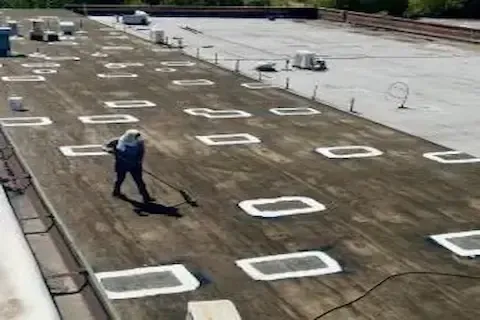
Pre-Winter Commercial Roof Repair Work in Blaine MN
Fall is the last reliable window to address roof problems before Minnesota winters make repair work difficult, dangerous, and far more expensive. For commercial properties in Blaine and across Anoka County, the period between late September and mid-November represents a narrow but critical opportunity. Once overnight temperatures drop consistently below freezing, adhesives cure poorly, sealants lose flexibility, and scheduling a qualified contractor becomes significantly harder. Getting repair work done now is not just practical — it is one of the more cost-effective decisions a property owner or facilities manager can make before the season turns.
Why Fall Timing Matters for Commercial Roofs
Commercial flat and low-slope roofs face a different set of stressors than residential pitched roofs. Standing water, ponding after heavy rain, and thermal movement across large membrane surfaces all create slow-developing vulnerabilities that may not become visible failures until winter precipitation arrives. When snow accumulates on a roof with an undetected seam separation or a clogged interior drain, that moisture no longer has anywhere to go. It sits, it freezes, and it forces water into the building through paths that were marginal all summer long.
In Blaine specifically, the flat terrain and established commercial corridors along Highway 65 and near the National Sports Center mean many buildings were constructed with large footprint roofs that require active maintenance to perform well. Roofs on distribution facilities, office parks, and retail strips in this area often carry significant membrane age and benefit from pre-season inspection on a regular cycle.
What Pre-Winter Repair Work Actually Covers
A pre-winter commercial roof inspection and repair visit is not a superficial walkthrough. It targets the systems most likely to fail under freeze-thaw stress. The core areas include:
- Seam and lap repairs: Membrane seams that have lifted, separated, or developed voids are the most common entry point for water. These need to be re-adhered and sealed before cold makes the membrane brittle and resistant to proper bonding.
- Flashing at penetrations: HVAC curbs, pipe boots, drains, and parapet walls all require tight flashing. Any cracked caulk or lifted metal flashing should be addressed before freeze cycles widen gaps further.
- Drain and scupper clearing: Interior drains and scuppers need to be cleared of debris. A blocked drain in October becomes a freeze-plugged drain in January, creating a load issue on top of a moisture issue.
- Blistering and surface degradation: Blisters in built-up or modified bitumen roofing hold moisture. If that moisture freezes, the blister can rupture and compromise the layer beneath it.
- Low-point ponding areas: Areas where water consistently ponds beyond 48 hours after rain should be noted, documented, and addressed if feasible before freeze conditions arrive.
If you are unsure where your roof stands, reviewing our commercial repair notes can give you a clearer sense of what a thorough assessment typically uncovers and what repair scopes commonly look like for Blaine-area buildings.
Scheduling Pressure in Anoka County Is Real
One factor that catches commercial property managers off guard every year is contractor availability in October. The fall season compresses demand across all roofing types simultaneously. Residential jobs surge, emergency repairs stack up after the first significant storms, and the same pool of qualified commercial crews is stretched thin across the metro. Anoka County is not exempt from this pattern. Contractors serving the Blaine, Coon Rapids, and Ham Lake corridor fill their fall calendars quickly, and properties that wait until October to call often find their window has already closed.
Booking a pre-winter inspection and repair visit in September gives you a realistic chance of completing work before conditions deteriorate. It also gives the contractor adequate time to source materials if the scope turns out to be larger than a simple seam repair. Membrane patches and specialty flashing materials are not always immediately available, and lead times matter when you are racing the calendar.
Common Pre-Winter Mistakes Commercial Owners Make
Several patterns repeat themselves each fall. The first is deferring a known problem with the assumption that it held all summer and will hold through winter. Summer heat is a relatively forgiving environment for a compromised roof compared to freeze-thaw cycling. What held in July may fail in February.
The second is confusing interior ceiling staining with an isolated problem. A single visible water stain inside a commercial space often reflects a larger membrane issue that has been slowly tracking water laterally before it finds a path down. By the time you see the stain, the entry point may be feet or yards from where the water appears.
The third is skipping the drain inspection. It is easy to verify that water moved off the roof in summer and assume the drains are functional. Leaves, debris, and gradual buildup through fall can reverse that quickly. Drain clearing is one of the simplest and most cost-effective steps in any pre-winter protocol.
What Blaine Property Managers Should Do Right Now
The practical step is straightforward: schedule a roof inspection before the end of September. Walk the interior of your building and document any ceiling staining, moisture bubbling, or unusual odors near mechanical rooms. Pull your last inspection report if you have one and check when seams and flashing were last addressed.
For Commercial Roof Repair services, working with a contractor who is familiar with Anoka County building stock, local climate patterns, and the specific demands of Blaine's commercial corridors will get you a more accurate scope and a more durable outcome than a general contractor who is filling in between other jobs.
Pre-winter repair is not about perfection. It is about closing off the vulnerabilities that will cost you significantly more to address in March than they would have cost in October. The buildings that come through Minnesota winters with minimal interior damage are almost always the ones where someone made that call in the fall.
